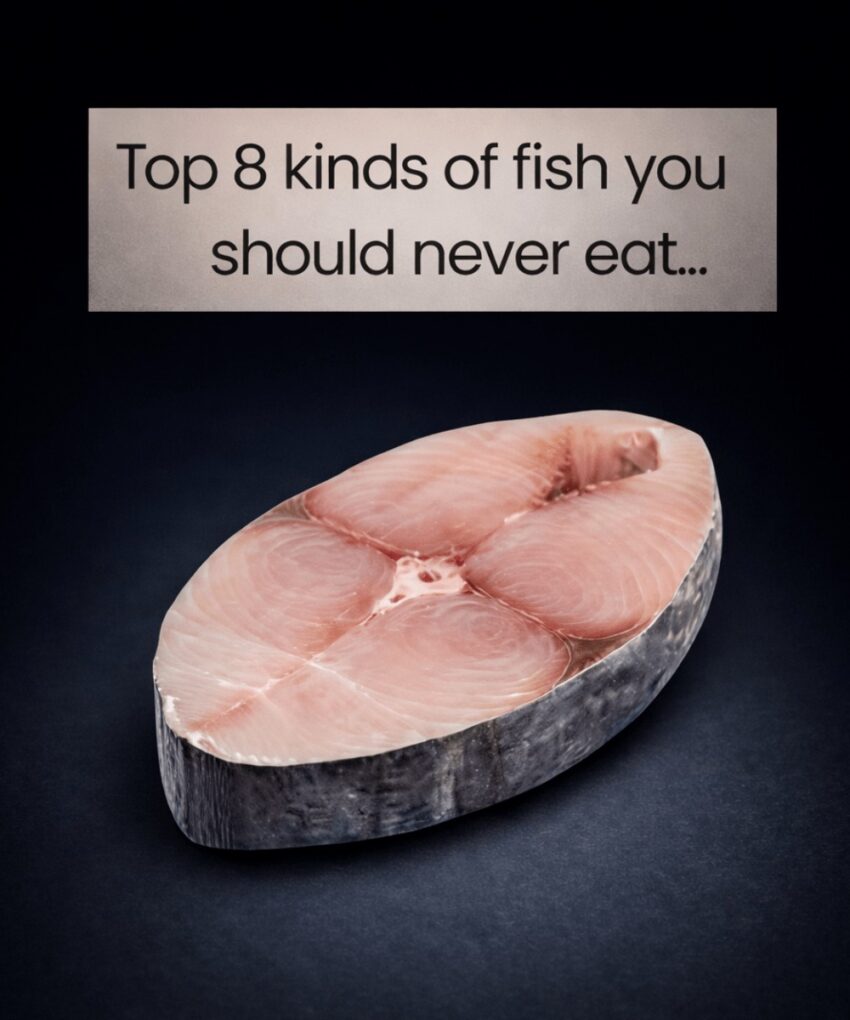
Here’s a fact‑based look at fish people are generally advised to avoid or eat sparingly — mainly because they can contain high levels of mercury or other toxins, especially for children, pregnant people, and frequent consumers. Government and nutrition experts warn that larger, long‑lived predatory fish tend to accumulate more contaminants through the food chain. (Healthline)
🛑 Fish Often Recommended to Avoid or Limit
These are species that often show up on health advisory lists for high mercury or toxin risk:
- Shark – High mercury levels due to being an apex predator. (Healthline)
- Swordfish – Another large predator with typically elevated mercury. (Healthline)
- King mackerel – Often among the highest mercury levels. (Healthline)
- Tilefish (especially Gulf of Mexico) – Very high mercury content compared with most fish. (U.S. Food and Drug Administration)
- Marlin – Long‑lived and prone to accumulating mercury. (Healthline)
- Bigeye tuna – Higher mercury than lighter tuna varieties. (WebMD)
- Orange roughy – Long lifespan means more time to collect toxins. (WebMD)
- Barracuda – Can carry ciguatera toxin in some regions (food poisoning risk). (The Environmental Literacy Council)
⚠️ Why Some Fish Are Riskier
- Mercury bioaccumulates: Bigger fish that eat smaller fish accumulate more mercury over time. (Healthline)
- Toxins like ciguatera or PCBs: Some tropical or reef fish may carry natural or pollution‑linked toxins unrelated to mercury. (The Environmental Literacy Council)
- Vulnerable groups: Pregnant people and young children are especially advised to avoid these species. (US EPA)
🐟 Important nuance
“Never eat” is too strong in most cases — occasional consumption in small amounts may be fine for healthy adults. The strong advisory is mostly for:
- pregnant or breastfeeding women
- children
- people who eat fish very frequently
For most of the general population, eating lower‑mercury choices regularly is healthy and beneficial. (US EPA)
✅ Safer Alternatives
If you want fish that’s typically lower in mercury and still nutritious:
- Salmon, sardines, anchovies, shrimp
- Pollock, cod, scallops, oysters
- Tilapia, trout, catfish
These are often recommended as “best choices” by health agencies and come with lots of omega‑3 benefits. (Healthline)
If you want, I can make a friendly cheat sheet showing how often to eat different types of fish (weekly servings), tailored for adults, kids, or pregnant people. Want that?
