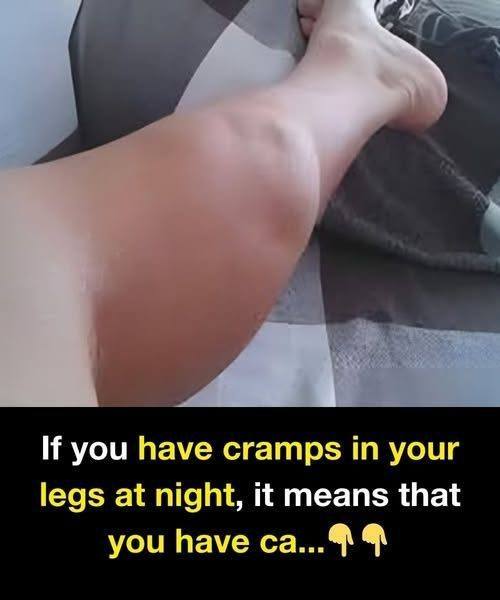
Night leg cramps (often called nocturnal leg cramps) are sudden, painful muscle spasms—usually in the calf, sometimes the foot or thigh—that happen while you’re resting or sleeping 🌙
They can last a few seconds to several minutes and may leave soreness afterward.
🔎 Common Causes
- Dehydration
- Low magnesium, potassium, or calcium
- Long periods of sitting or standing
- Overuse of muscles during the day
- Pregnancy
- Tight calf muscles
- Certain medications (like diuretics or statins)
- Poor circulation (sometimes)
Sometimes, there’s no clear cause.
🚑 What To Do When a Cramp Happens
1️⃣ Stretch immediately
- Straighten your leg
- Pull your toes toward your shin
- Or stand and gently press heel into the floor
2️⃣ Massage the muscle
3️⃣ Apply heat (heating pad or warm towel)
🛡 How To Prevent Night Cramps
💧 1. Stay Hydrated
Aim for steady water intake throughout the day.
🧂 2. Check Electrolytes
Foods rich in:
- Magnesium → spinach, nuts, seeds
- Potassium → bananas, avocados, sweet potatoes
- Calcium → dairy, leafy greens
If cramps are frequent, magnesium glycinate at night sometimes helps (ask your doctor first).
🦵 3. Stretch Before Bed
Simple calf stretch for 30 seconds per leg.
👟 4. Move During the Day
Avoid sitting too long without stretching.
⚠️ See a Doctor If:
- Cramps are frequent and severe
- One leg is swollen, red, or warm
- You have numbness or weakness
- You have diabetes, circulation problems, or take medications that may cause cramps
💡 Quick bedtime routine:
- Light calf stretch
- Warm shower
- Glass of water
- Gentle ankle circles in bed
If you’d like, tell me:
- Which part of your leg cramps?
- How often it happens?
- Any medications or health conditions?
I can narrow down the most likely cause.
