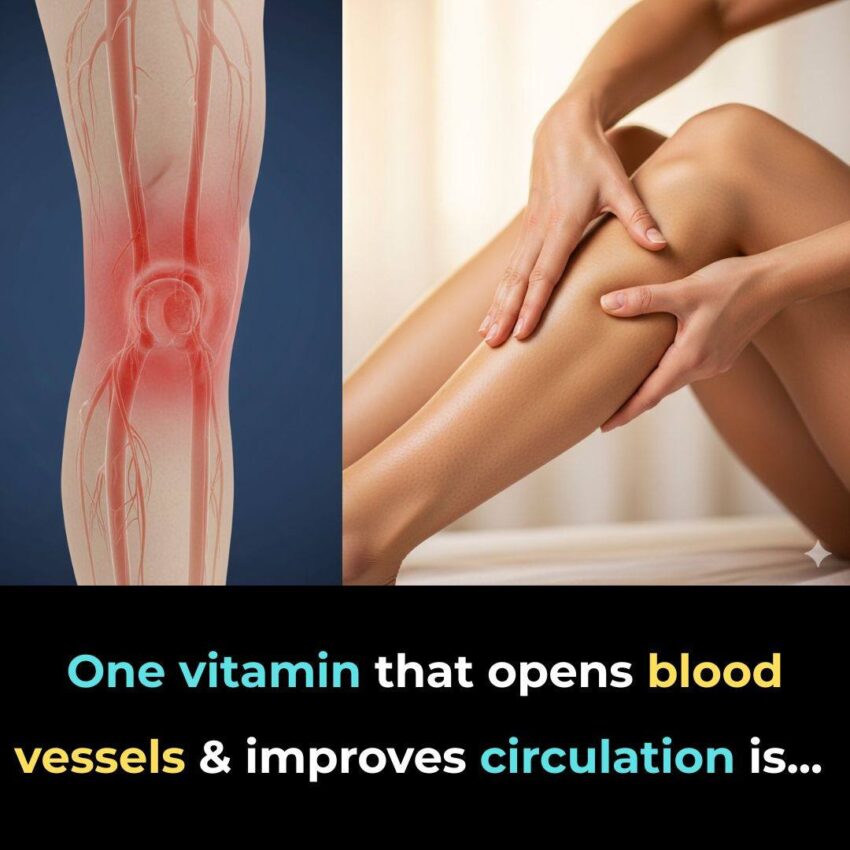
Vitamin D can support blood vessel health, but it’s not primarily a vasodilator (a nutrient that directly relaxes and opens blood vessels).
🫀 What Vitamin D Actually Does
Vitamin D helps circulation indirectly by:
- Supporting endothelial function (the lining of blood vessels)
- Reducing inflammation
- Helping regulate the renin–angiotensin system (involved in blood pressure control)
- Supporting calcium balance in vessel walls
Low vitamin D levels are associated with:
- Higher blood pressure
- Increased cardiovascular risk
- Poor vascular function
But vitamin D does not immediately “open” blood vessels the way some nutrients or compounds do.
🔓 Nutrients More Directly Linked to Vasodilation
If the goal is relaxing blood vessels, these are more directly involved:
- Vitamin B3 (Niacin) – causes noticeable flushing from vasodilation
- Magnesium – relaxes smooth muscle in vessel walls
- L-arginine / L-citrulline – increase nitric oxide
- Nitrates (from foods like beets) – increase nitric oxide
- Potassium – helps regulate blood pressure
⚖️ Bottom Line
- Vitamin D = supports vascular health long-term
- Niacin, magnesium, nitric oxide boosters = more direct vasodilation
If you’re asking for a specific issue (cold hands/feet, high blood pressure, ED, leg cramps), I can narrow this down more precisely.
