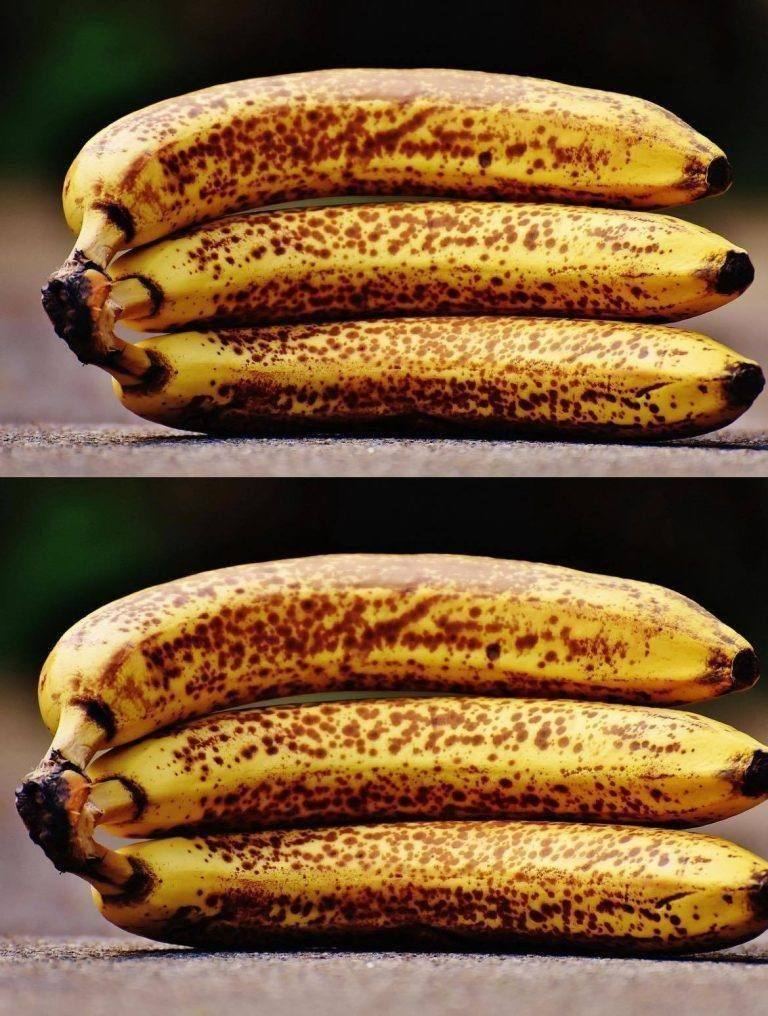
When you see bananas with brown spots on their peels, it usually indicates that the banana is ripe or very ripe. Here’s a detailed breakdown:
🍌 What Brown Spots Mean
- Ripeness
- Small brown spots are natural as the banana ripens.
- The fruit inside is sweeter and softer because starches have converted to sugars.
- Overripe but still edible
- Larger brown patches mean the banana is very ripe.
- Texture may be mushy; ideal for baking, smoothies, or banana bread.
- Oxidation or bruising
- If spots are from bumps or pressure, the banana may have localized soft areas but is usually still safe to eat.
- Not harmful
- Brown spots on the peel are generally not a sign of mold or bacteria.
- However, if the banana has a fermented smell or the peel is black and mushy, it may be spoiled.
🌟 Uses for Brown-Spotted Bananas
- Banana bread or muffins – adds natural sweetness.
- Smoothies – creamy texture and sweet flavor.
- Frozen banana chunks – for ice cream or desserts.
- Pancakes or oatmeal topping – natural sweetener.
⚠️ When to Avoid
- Large black patches with mold
- Strong sour or alcoholic smell
- Extremely mushy texture throughout
💡 Tip: To slow ripening, store bananas in the fridge once they reach your desired ripeness. The peel may darken, but the fruit inside stays good longer.
If you want, I can also give a guide to ripening bananas faster or using brown-spotted bananas creatively in recipes.
Do you want me to do that?
