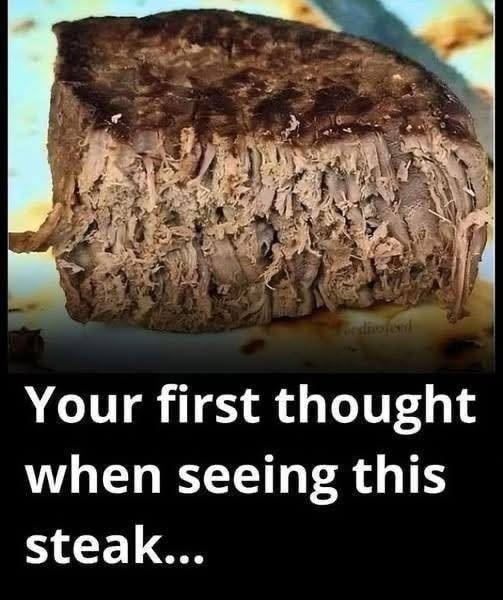
A steak that appears heavily overcooked usually has these characteristics:
🔹 Visual and Textural Signs
- Color:
- Uniformly gray or brown throughout with little to no pink in the center.
- Dark, sometimes slightly dry-looking edges.
- Texture:
- Very firm or tough to the touch.
- Fibers may appear dry and stringy rather than juicy.
- Juice:
- Minimal or no visible juices when cut.
- Often dry because most of the internal moisture has evaporated.
🔹 Common Causes
- Cooking at too high a temperature for too long.
- Cooking the steak without monitoring internal temperature.
- Using a thin cut, which cooks faster and can dry out easily.
- Resting steak too long after cooking, letting residual heat continue to dry it out.
🔹 Tips to Avoid Overcooking
- Use a meat thermometer:
- Rare: 120–125°F (49–52°C)
- Medium-rare: 130–135°F (54–57°C)
- Medium: 140–145°F (60–63°C)
- Well-done: 160°F (71°C) and above
- Cook on moderate heat:
- Sear at high heat briefly, then reduce heat to finish cooking.
- Rest the steak:
- Let it sit 5–10 minutes after cooking to retain juices.
- Consider cooking method:
- Thicker cuts benefit from reverse sear or finishing in the oven to prevent overcooked edges.
A heavily overcooked steak is dry, tough, and gray-brown, often lacking the juiciness and tenderness expected from a well-cooked cut.
If you want, I can explain how to rescue or improve the texture of an overcooked steak to make it more palatable. Do you want me to do that?
