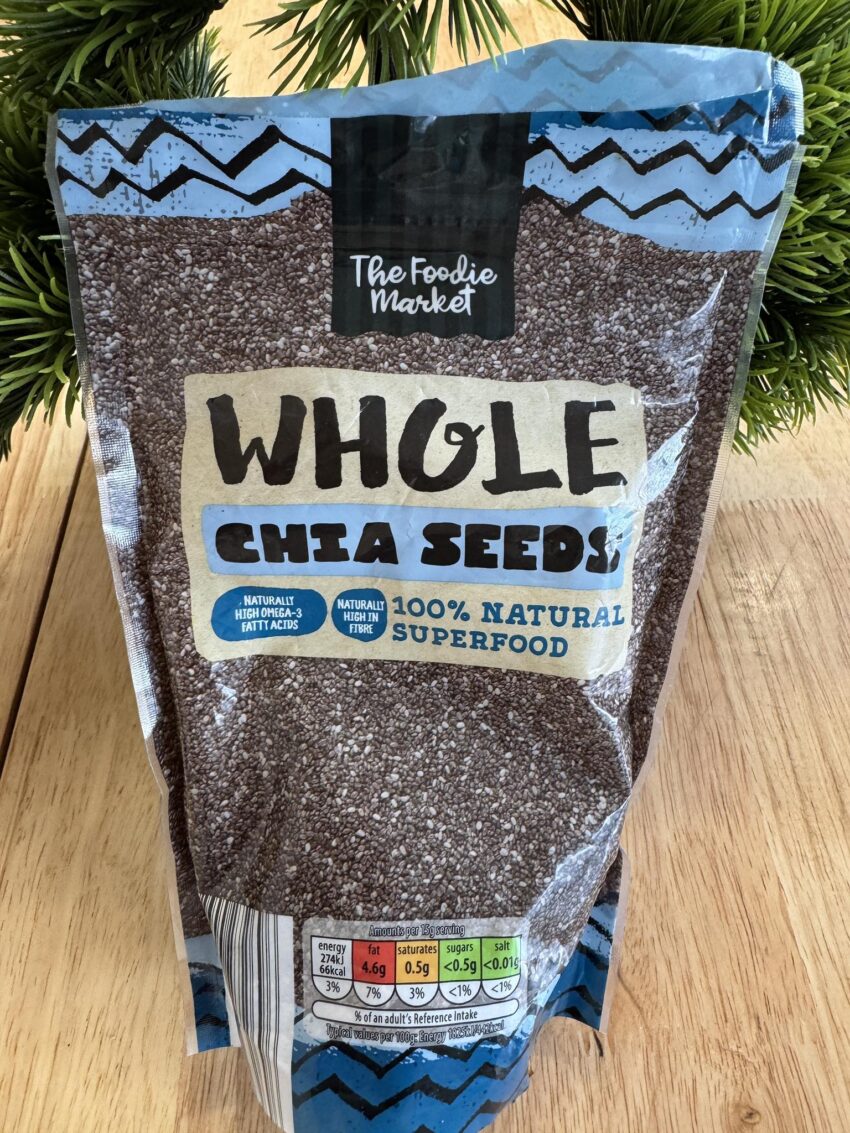
Chia seeds are tiny, nutrient-packed seeds that have become very popular as a “superfood” 🥄✨
Here’s a detailed overview:
🌱 What Chia Seeds Are
- Scientific name: Salvia hispanica
- Origin: Native to Central and South America
- Appearance: Tiny, oval seeds, usually black, white, or gray
- Taste: Very mild, slightly nutty
🥗 Nutritional Highlights (per 28g / 1 oz, ~2 tbsp)
- Calories: ~138
- Fiber: 10–11g (excellent for digestion)
- Protein: 4–5g
- Omega-3 fatty acids: 5g (plant-based ALA)
- Minerals: Calcium, magnesium, phosphorus, manganese
- Antioxidants: High content that supports cell health
💧 How They Work
- Absorb liquid: Can soak up 10–12 times their weight in water, forming a gel-like consistency.
- Satiety: Expanding in the stomach, they help you feel full.
- Digestive health: High fiber supports regularity and gut health.
🥄 How to Use Chia Seeds
- Soaked in liquids
- Mix 1–2 tbsp in water, milk, or plant milk for 10–15 minutes to form chia gel.
- Use in smoothies, puddings, or overnight oats.
- Sprinkle on foods
- Add raw chia seeds to yogurt, cereal, salads, or baked goods.
- Baking & cooking
- Can replace eggs in vegan recipes (1 tbsp chia + 3 tbsp water = 1 egg).
- Mix into muffins, breads, or pancakes for extra fiber and nutrition.
💡 Tips & Safety
- Hydrate seeds first if consuming large amounts to prevent digestive discomfort.
- Start small: 1–2 tsp per day, then increase as your body adjusts.
- Store properly: Keep in a cool, dry place or refrigerate to prevent rancidity.
If you want, I can give you 3 easy and tasty chia seed recipes — including pudding, smoothie, and energy bites — that are perfect for beginners.
Do you want me to do that?
