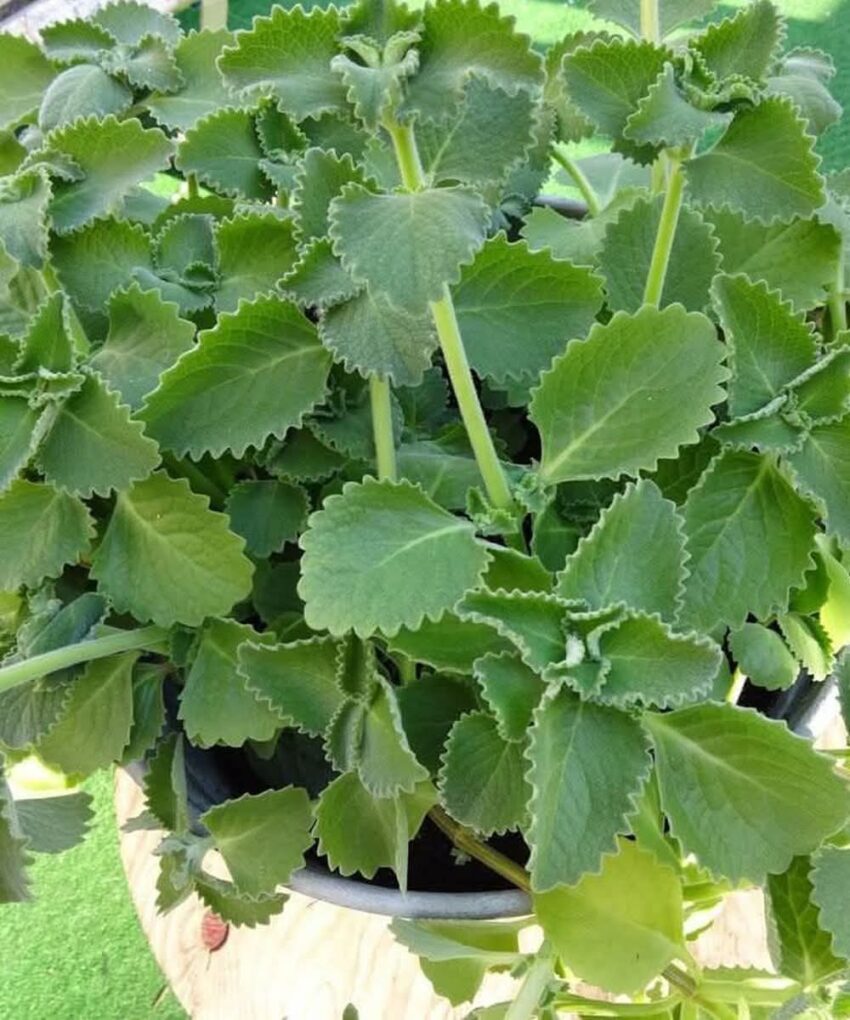
Cuban oregano is a flavorful, aromatic herb often used in cooking, traditional medicine, and as an ornamental plant 🌿✨
Here’s a full overview:
🌱 About Cuban Oregano
- Scientific name: Plectranthus amboinicus (sometimes Coleus amboinicus)
- Family: Lamiaceae (mint family)
- Origin: Tropical regions of Africa and India, widely grown in the Caribbean
- Appearance: Thick, succulent leaves with serrated edges, usually green-purple
- Flavor & Aroma: Strong, pungent, slightly peppery and oregano-like, more intense than Mediterranean oregano
🧑🍳 Culinary Uses
- Meat dishes: Adds depth to beef, chicken, pork, and fish
- Soups & stews: Common in Caribbean and Latin American cooking
- Rice & beans: Enhances flavor in traditional side dishes
- Herbal teas: Leaves can be brewed for a fragrant tea
Tip: Cuban oregano is very potent, so start with a small amount and adjust to taste.
🌿 Health & Traditional Uses
- Respiratory support: Used in teas for coughs, colds, and congestion
- Digestive aid: Can help with indigestion or bloating
- Antimicrobial & anti-inflammatory properties: Traditionally used topically for minor skin issues
- Rich in antioxidants: Supports overall wellness
🏡 Growing & Care
- Sunlight: Prefers full sun to partial shade
- Water: Drought-tolerant; water moderately, let soil dry between watering
- Propagation: Easily grown from cuttings
- Storage: Fresh leaves can be refrigerated for 1–2 weeks; can be dried for long-term use
💡 Cooking tip: Because Cuban oregano is stronger than Mediterranean oregano, use sparingly in dishes and remove whole stems before serving if needed.
If you want, I can make a simple Caribbean-style recipe using Cuban oregano that highlights its unique flavor in meat or vegetables.
Do you want me to do that?
