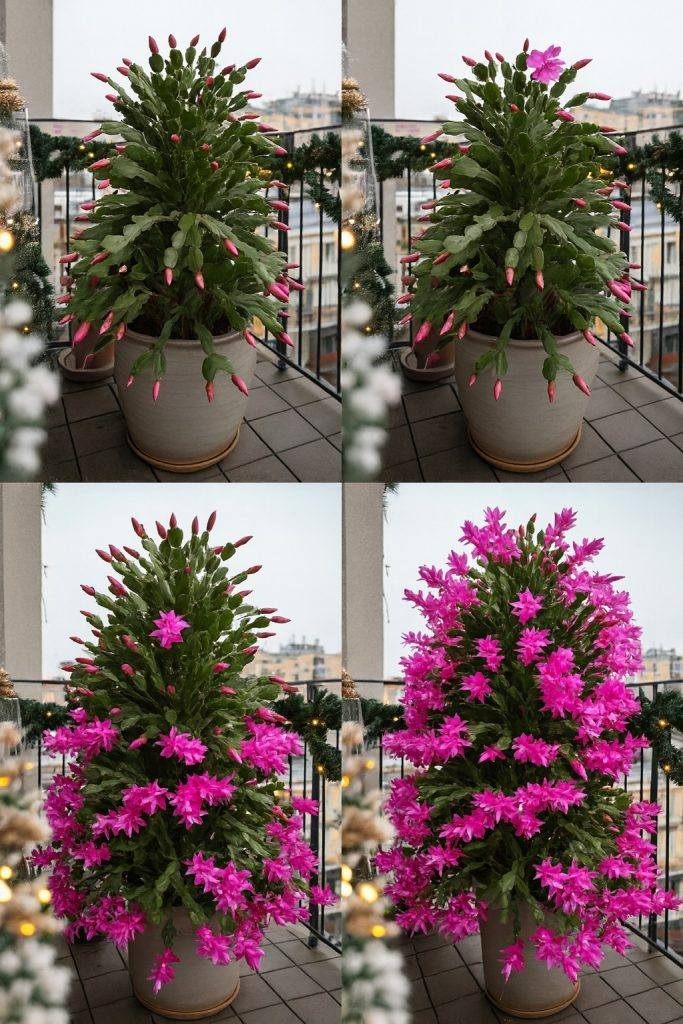
Ah, you mean Schlumbergera—the fancy botanical name for what most people know as Christmas cactus (or Thanksgiving cactus, depending on the species). 🌵🎄
Here’s a complete breakdown:
Overview
- Genus: Schlumbergera
- Family: Cactaceae (cactus family)
- Origin: Coastal mountains of southeastern Brazil
- Type: Epiphytic cactus (grows on trees in nature, not desert soil)
- Famous for: Bright, tubular flowers that bloom in winter
Key Species / Varieties
- Schlumbergera truncata – Thanksgiving cactus
- Jagged, pointed leaf edges
- Blooms late November–December
- Schlumbergera × buckleyi – Christmas cactus
- Rounded leaf edges
- Blooms late December–January
- Hybrids
- Most store-bought “holiday cactus” are hybrids with flowers in pink, red, white, orange, or purple
Care Tips
Light:
- Bright, indirect sunlight. Too much direct sun can scorch leaves.
Water:
- Water thoroughly when top inch of soil feels dry.
- Avoid waterlogging (roots like to breathe).
Temperature:
- Ideal: 60–70°F (15–21°C)
- Cooler nights (50–55°F) help trigger blooms
Soil:
- Well-draining, slightly acidic soil
- Cactus mix + some peat or orchid bark works well
Fertilizer:
- Balanced, water-soluble fertilizer every 2–4 weeks during growing season
- Stop fertilizing 6–8 weeks before bloom
Pruning / Bloom Encouragement:
- After flowering, prune a few segments to encourage branching
- 12–14 hours of darkness per day for 6 weeks in fall triggers blooms
Propagation:
- Easy from stem cuttings
- Let cuttings callus 24 hours, then plant in moist, well-draining soil
Common Problems
- Bud drop: Too much water, sudden temperature change, or moving plant
- Root rot: From overwatering
- Pests: Mealybugs and spider mites occasionally
💡 Fun fact: Schlumbergera can live for decades with proper care and often blooms around the holidays, making them a classic festive gift.
If you want, I can make a step-by-step guide to getting your Schlumbergera to bloom beautifully this winter, with watering, light, and feeding schedule.
Do you want me to do that?
